Movement
Animation is used to reveal relationships that already exist inside the drawing and to create passages between adjacent physical works.
The work begins by hand. Structure, repetition, erasure and connection are built on paper before animation, colour, sound or augmented reality are introduced.
Geometry is used as an invisible scaffold rather than a visible style.
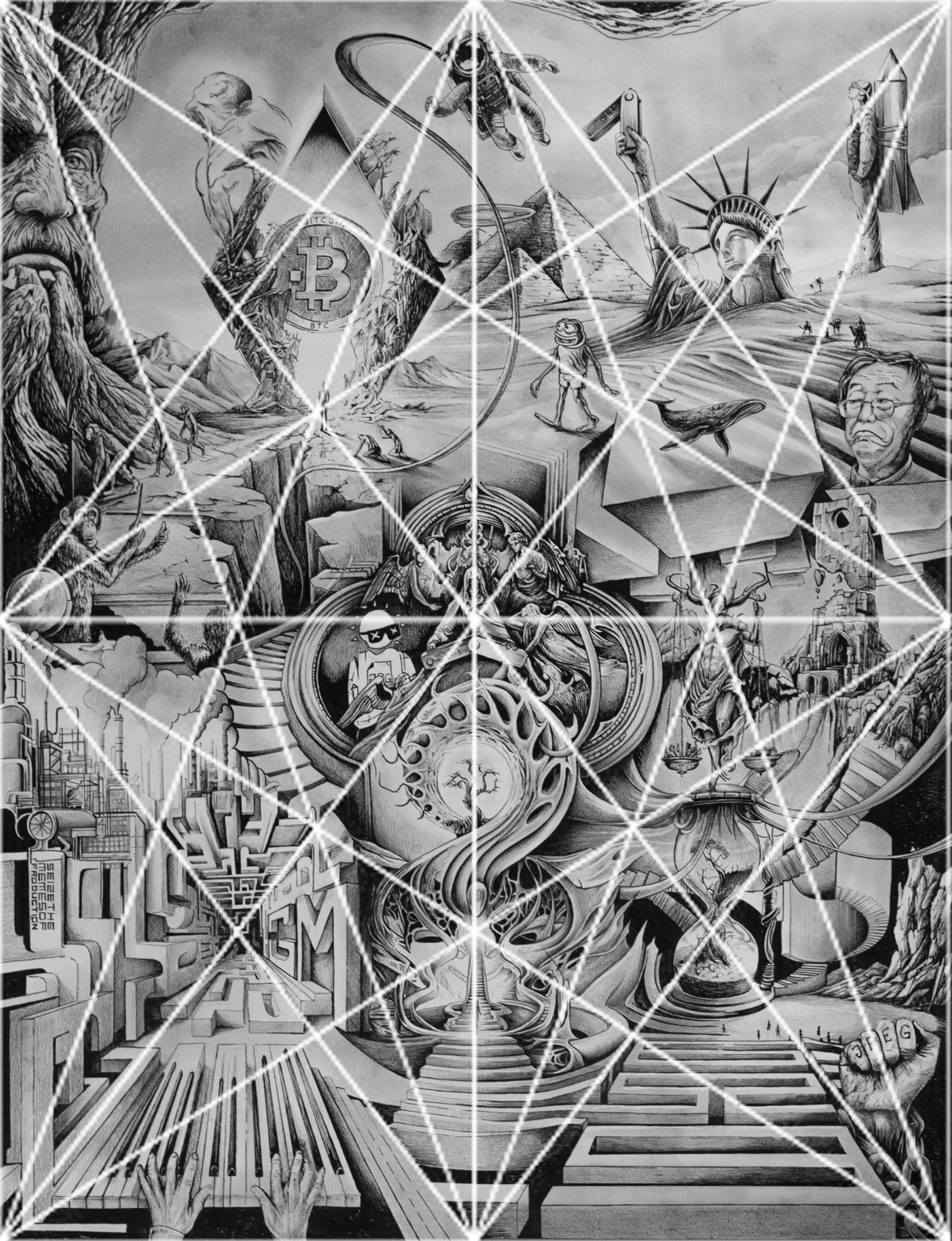
Before a composition becomes dense, a geometric armature can determine where movement accelerates, where visual weight is held and where important forms intersect. The system provides order without deciding the image in advance.
From that scaffold, drawing proceeds intuitively. New symbols can interrupt the plan, figures can migrate and architectural lines can become bridges into adjacent works.
Individual sheets are treated as autonomous works and as possible fragments of a larger system.
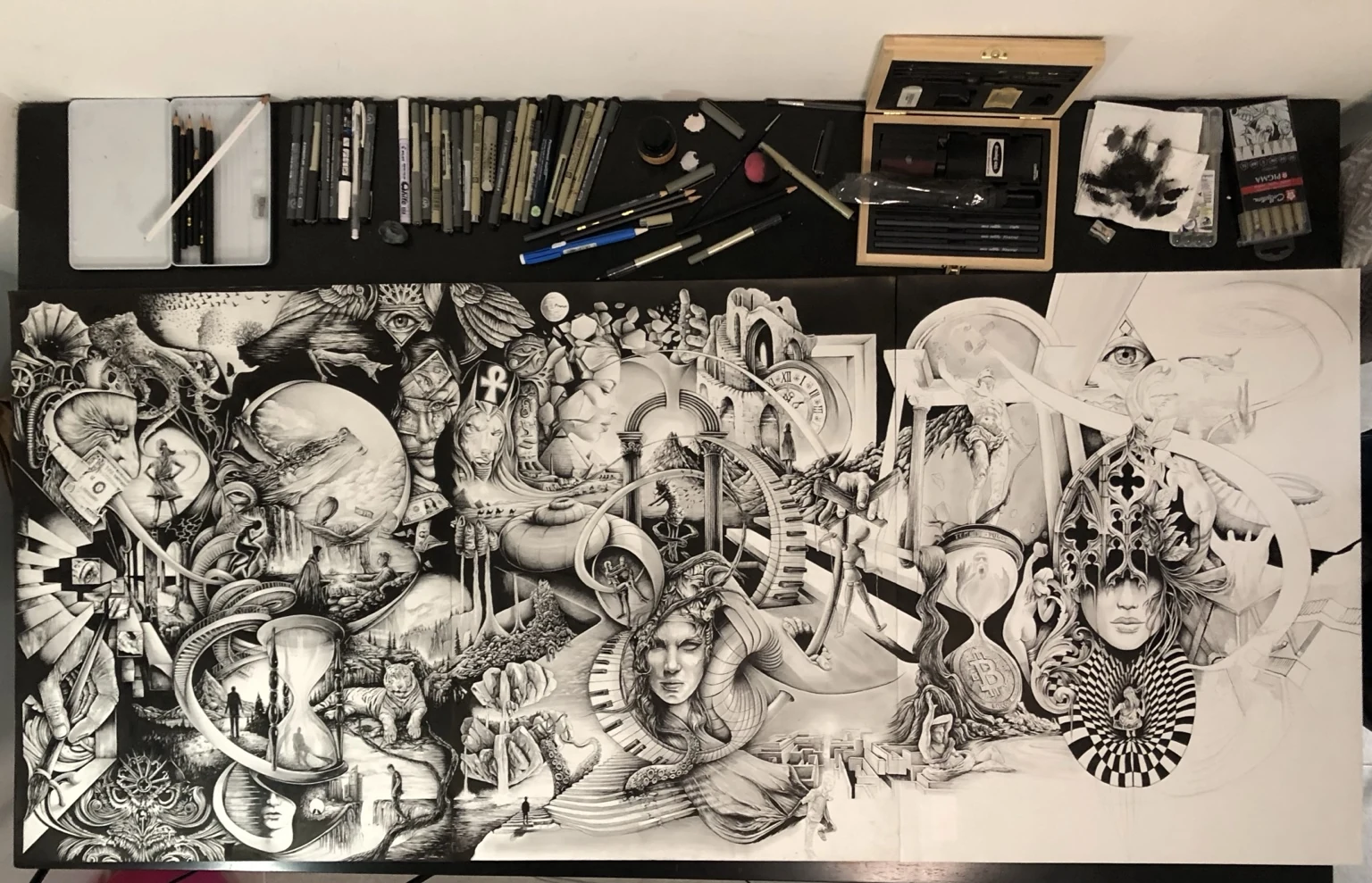
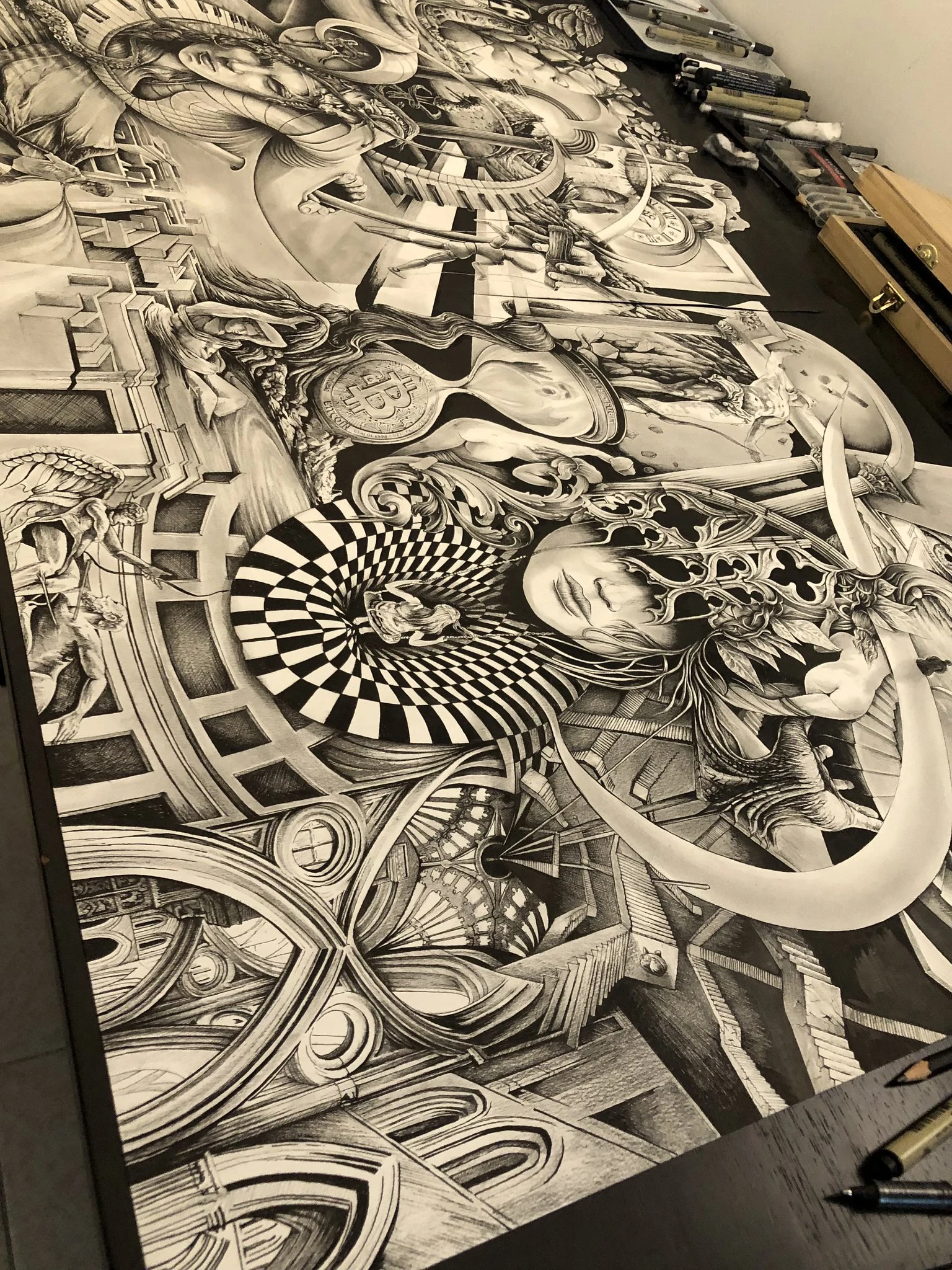
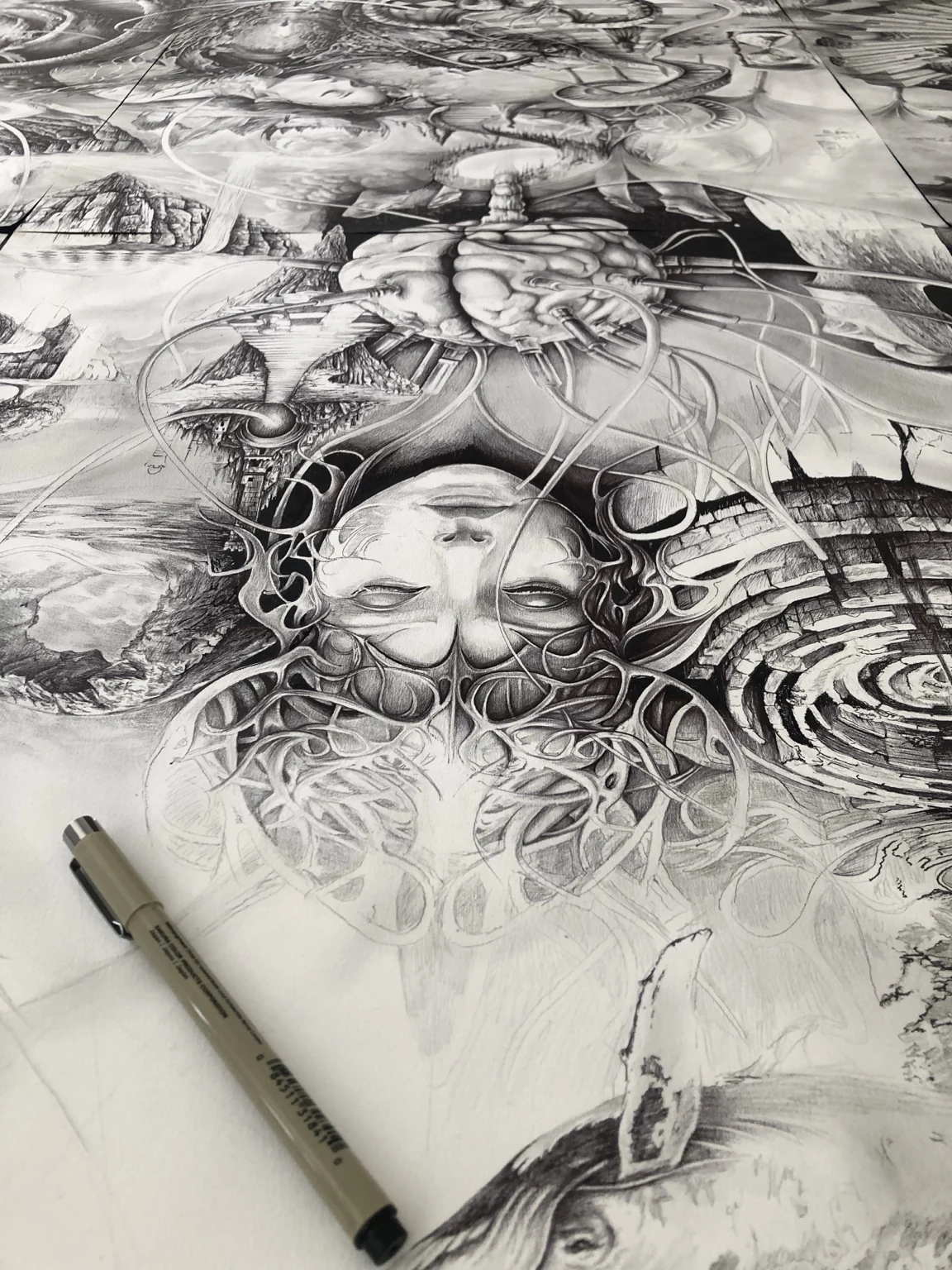
Digital media enters only after the physical language is established.
Animation is used to reveal relationships that already exist inside the drawing and to create passages between adjacent physical works.
Augmented reality lets the paper continue beyond its surface while the original drawing remains the physical anchor.
Projects such as Decentraland Art Week translate the image into navigable architecture rather than treating it as a flat screen asset.
Only studio and artwork-development material belongs here. Conference trailers and exhibition recaps are kept in Exhibitions.